This week, I chose to explore this lesson, "Eggsactly with a Dozen Eggs." The materials needed are simple and cost effective. Something I would do is incorporate the model on the classroom smart board also with eggs that can be virtually moved inside and outside the carton. To encourage mathematical discourse, first I would assign students to working in pairs. Then I would ask them to talk to the group next to them and share their ideas after completing each question on the worksheet. This will get the students more comfortable with working with classmates and become more comfortable with mathematical discourse. Also the students learn from each other. Then students could come up to the smart board and show their answers. This would give me the opportunity to ask, "How did you know that? or What other fractions are equivalent?"
Another thing I like about this lesson is when doing the worksheet, if I the class talked about and shared answers on the smart board for one question at a time, it is easy to do in more than one math session. For example if Day one, we did the lesson and stopped after question number one, on day two it would be easy to pick up where we left off. If needed, a quick review of the question the students did the previous day could be done before moving on. Or, the students could just pick up where they left off the day before. Overall, I think the lesson has a nice flow and would interest the students.
Eggsactly with a Dozen Eggs
Materials
- An egg carton filled with 12 plastic eggs (or 12 markers) for each pair of students
- Eggsactly Eggs Activity Sheet
Instructional Plan
Introduce the set representation by having each pair of students examine an egg carton filled with plastic eggs (or some other marker if plastic eggs are unavailable or cost prohibitive.) Ask students how many eggs are in the set. [12.] Suppose six are used to bake a cake. Have students remove six eggs. Students should record their egg configuration on the Eggsactly Eggs Activity Sheet.
Have students participate in a gallery walk examining other students’ egg cartons to see all the different ways students might have removed six.
- Ask students what all the egg cartons have in common. [There are six remaining.]
- What fraction of the entire set is 6? [6/12; accept 1/2 or other equivalent fractions.] If students do not make the connection between equivalent fractions, e.g., 6/12 = ___, they have an opportunity to develop these relationships in later lessons.
- What fraction was removed? [6/12 or 1/2] Have students label their recording sheet as 6/12. Some students may choose to label their sheet with an equivalent fraction, such as 1/2. If so, this provides an excellent opportunity to introduce equivalent fractions.

Continue removing varying numbers of eggs. For example, suppose this time that we need eight eggs to bake our cake. Have students remove eight eggs. Students should record their egg configuration on the Eggsactly Eggs Activity Sheet. Have students go on another gallery walk to see all the different ways students might have removed eight.
- Ask students what all the egg cartons have in common. [There are four remaining.]
- What fraction of the entire set is 4? [4/12; accept 1/3 or 2/6.]
- What fraction was removed? [8/12, 2/3, or 4/6.] For the remaining eggs, have students label their recording sheet as 4/12. [Accept 1/3 or 2/6.]
Have students investigate the different ways they can arrange their eggs when given the fraction. For example, ask students to show 1/4 of a dozen? (Use the Eggsactly Eggs Activity Sheet to have students represent several different configurations all equivalent to 1/4 of a dozen.) Have students identify fraction relationships associated with the set (e.g., 6 of the set of 12 eggs is the same as 6/12 of the set, OR when the numerator stays the same and the denominator increases, the fractions become smaller — 1/3 is smaller in area than 1/2).
Have students work in pairs to continue the investigation as different numbers of eggs are used. Students should be given time to investigate the variety of ways in which the eggs can be arranged. These arrangements should be recorded on the Eggsactly Eggs Activity Sheet and the sheet should be labeled according to the fraction. For example, students might use several images of the egg carton on the activity sheet to record all the ways to show x of a dozen.
Have students investigate the different ways they can arrange their eggs when given the fraction. For example, ask students to show 1/4 of a dozen? (Use the Eggsactly Eggs Activity Sheet to have students represent several different configurations all equivalent to 1/4 of a dozen.) Have students identify fraction relationships associated with the set (e.g., 1/2 of the set of 12 eggs is the same as 6/12 of the set, OR when the numerator stays the same and the denominator increases, the fractions become smaller, e.g. 1/3 is smaller in area than 1/2).
Convene the whole class to discuss the activities in this lesson. The guiding questions may be used to focus the class discussion as they were used to focus individual student’s attention on the mathematics learning objectives of this lesson.
Assessments and Extensions
Assessment Option
- At this stage of the unit, it is important to know whether students can:
- Demonstrate understanding that a fraction can be represented as part of a set
- Identify fractions when the whole (set) and part of the set are given
- Identify fraction relationships associated with a set of twelve
- Student recordings can be used to make instructional decisions about students’ understanding of fraction relationships. Areas needing additional work can be developed during subsequent lessons. More challenging experiences can be provided for those students who need them. You may choose to use the Class Notes recording sheet to make anecdotal notes about students’ understandings.
- Collect students' Eggsactly Eggs Activity Sheets. Use the Eggsactly Eggs Answer Key to check student responses to the questions on the activity sheet.
 Eggsactly Eggs Answer Key
 Answer Key
Extension
Move on to the next lesson, Eggsactly with Eighteen Eggs.
Questions and Reflections
Questions for Students
1. What do you notice about the relationship between 1/2 of a dozen and 1/4 of a dozen?
[Students should be able to tell from their recordings that 1/4 is half of 1/2.]
2. What do you notice about the relationship between 1/3 of a dozen and 1/6 of a dozen?
[Students should be able to tell from their recordings that 1/6 is half of 1/3.]
3. What can you tell about the size of the fraction when the numerator is the same for both fractions, e.g., 1/4 and 1/6?
[The smaller the denominator, the larger the fraction.]
4. What can you tell about the size of the fraction when the denominator is the same for both fractions, e.g. 2/5 and 3/5?
[The smaller the numerator, the smaller the fraction.]
Teacher Reflection
- Which students understand that a fraction can be represented as part of a set? What activities are appropriate for students who have not yet developed this understanding?
- Which students can identify fractions when the whole (set) and part of the set is given? What activities are appropriate for students who have not yet developed this understanding?
- Which students/groups can articulate relationships between fractions?
- What parts of the lesson went smoothly? What parts should be modified for the future?
Objectives and Standards
Learning Objectives
Students will:
- Demonstrate understanding that a fraction can be represented as part of a set, given a set of identical items (eggs).
- Identify fractions when the whole (set) and part of the set is given.
- Identify fraction relationships associated with the set, such as one fourth is one half of one half.
3rd to 5th
- Grade 3
- CCSS.Math.Practice.MP4
Model with mathematics. - CCSS.Math.Practice.MP5
Use appropriate tools strategically.
3rd to 5th
- Grade 4
- CCSS.Math.Practice.MP4
Model with mathematics. - CCSS.Math.Practice.MP5
Use appropriate tools strategically.
3rd to 5th
- Grade 5
- CCSS.Math.Practice.MP4
Model with mathematics. - CCSS.Math.Practice.MP5
Use appropriate tools strategically.
- CCSS.Math.Practice.MP4
Model with mathematics.
- CCSS.Math.Practice.MP5
Use appropriate tools strategically.
Related Resources
 |
Grade: 3rd to 5th
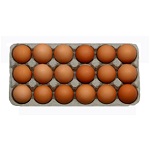
Examine relationships among the fractions used to describe part of a set of eighteen. |
.jpg) |
Grade: 3rd to 5th
Explore equivalent fractions. |
 |
Grade: 3rd to 5th
Use fractions to describe a set of attribute pieces. |
 |
Grade: 3rd to 5th
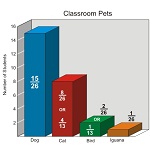
Conduct a class survey. |
 |
Grade: 3rd to 5th
Use everyday items to identify fractions. |


Susan,
ReplyDeleteI am in love with this idea! It is such a fun and hands-on way for our students to see how each other thinks. This gives me the idea of students teaching each other with how everyone's minds would work differently or maybe even the same (it also gives you as the educator insight on how their minds work). A fun twist on this activity would be to use easter eggs if you wanted to do it closer to the holiday. I love how involved this is but yet comes across as a super simple activity that won't overwhelm your students (hopefully).
GREAT WORK!!
Susan,
ReplyDeleteI think this idea is really cute. Any activity that is hands on and visual is a great way for students to start to get an understanding of fractions. I also think that because the lesson is using manipulative, not the normal kind, the students will not even realize that you are providing them with resources. Additionally, the students will likely have more success. This is important because when students feel comfortable and confident about engaging with the content, it will eventually shine through as enthusiasm to attempt more problems. Great Job!